
Sled training is a movement format used in crossfunctional fitness environments where resistance is pushed or pulled across the ground. This article explains how sled work functions, why it is included in mixed training systems, and how it supports strength and conditioning goals. The focus stays on structure, movement logic, and training role rather than performance outcomes.
What sled training represents
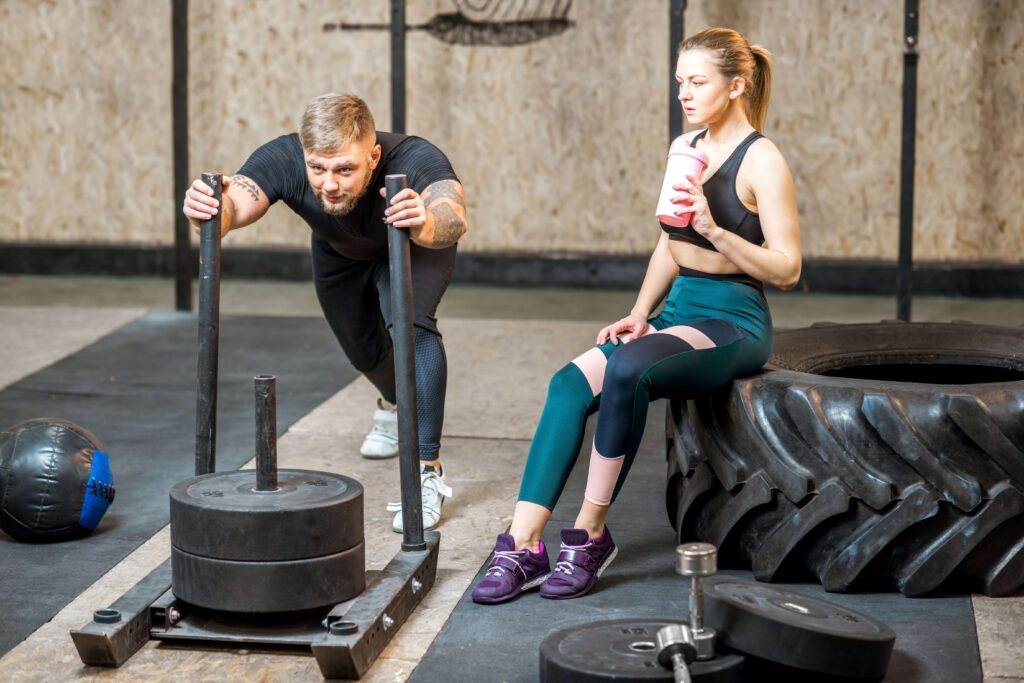
A sled is a simple metal frame loaded with weight and moved by human force. The movement can be forward, backward, or lateral. Unlike lifting, sled work keeps constant tension through the entire distance. There is no pause where the load becomes lighter.
In crossfunctional fitness, sled training is valued because it limits impact on joints while still demanding high effort. Feet stay close to the ground. There is no jumping. This makes sled work suitable for many body types and experience levels.
The resistance depends on surface, load, and movement speed. A sled on turf behaves differently than on rubber or concrete. Because of this, the same weight may feel heavier or lighter depending on location.
Movement patterns and mechanics
Sled training uses natural movement patterns. Pushing mimics forward drive. Pulling mimics dragging or retreating motion. These patterns connect to daily physical actions rather than isolated muscle work.
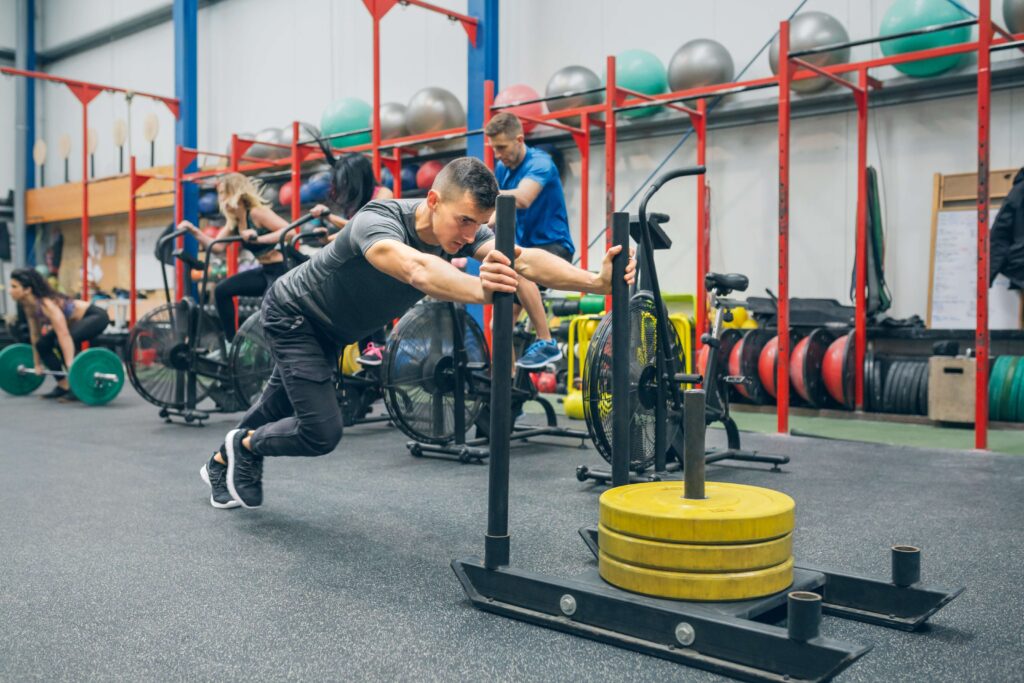
Posture matters during sled work. The body leans slightly forward. Core stays tight. Arms and legs move in rhythm. If posture breaks, efficiency drops fast. This immediate feedback teaches control without verbal correction.
Breathing also changes. Because there is no eccentric phase like in lifting, muscles stay active the whole time. Heart rate rises steadily. Recovery feels different compared to barbell work.
Place of sled work in training sessions
Sled exercises can appear at different points of a session. Sometimes they open training to prepare muscles. Other times they finish sessions to drain remaining energy. Their role depends on program design.
In some gyms, sled work is part of conditioning blocks. In others, it replaces running or jumping when space or noise matters. Sleds are quiet and controlled, which makes them useful indoors.
Common uses of sled training include:
- Short–distance heavy pushes for strength focus
- Medium–distance moderate pushes for conditioning
- Pulling movements to balance lower body work
- Team based sled tasks that require coordination
Each use changes intensity and purpose. The tool stays the same, but the outcome shifts with structure.
Why sled work is considered functional
Crossfunctional fitness values movements that involve many joints and muscles at once. Sled training fits this model. Legs drive force. Core stabilizes. Arms assist or guide. No single muscle works alone.
Another functional aspect is load scaling. Weight can be increased or reduced quickly. Distance can change without reloading. This allows many people to use the same equipment during one session.
There is also a low technical barrier. Unlike Olympic lifts, sled work does not require long skill learning. People understand the task immediately. This makes it accessible while still demanding.
Adaptation and fatigue
Sled fatigue feels different from lifting fatigue. Muscles burn, but joints feel less stress. Recovery between efforts is often faster. Because of this, sled work can be repeated often without overload.
This does not mean it is easy. Heavy sled pushes can create extreme effort in short time. The difference is how stress is distributed. Tendons and joints receive less shock.
For this reason, sled training is often used during high–volume phases or when other impact movements are reduced.
Prowler as a sled variation
The Prowler is a specific sled variation often mentioned in crossfunctional fitness discussions. Its main difference is handle height options. Higher handles change body angle, making movement more upright. Lower handles force a deeper lean and higher demand on legs and trunk.
This variation does not change the basic idea of sled work. The load still moves across the ground by pushing force. What changes is how the body organizes effort. With higher handles, movement feels more like fast walking with resistance. With lower handles, effort becomes heavier and more strength–focused.
Because of this flexibility, the Prowler appears in different session goals. One day it supports conditioning. Another day it supports power output. The same equipment adapts without complex adjustments.
Comparison with other conditioning tools
Sled work often replaces other conditioning tools. Unlike running, it does not rely on elastic rebound. Unlike cycling, it uses full–body force. Compared to rowing, movement stays horizontal and grounded.
This difference matters in training design. Coaches choose sleds when they want output without flight or impact. This choice protects joints while still demanding effort.
Another difference is speed control. A sled never moves faster than the person pushing it. There is no momentum assistance. Once force drops, movement stops. This creates honest feedback.
Mixing Sled Work with Other Training
Sled training is good alone, but you can also do more with other exercises. Many programs put sled pushes or pulls with bodyweight exercises, kettlebell moves, or rowing. This way work many energy systems and not boring. For example, short sled sprints and then mobility or core drills help power and keep joints healthy.
Athletes can do sled work with barbell lifts. Pushing a sled first can wake up leg muscles for squats or deadlifts. Or finish the workout with sled pulls for strong cardio but less jump stress. Little changes like grip or stance help work weak muscles or special groups.
In a group, the sled can be used in team challenges or relay circuits. This helps with timing, coordination, and being social, but it is still fit for each person. Rest between sled and other exercises is important to not overtrain. When mixed with other moves carefully, a program can build strength, endurance, and good movement together.
How sled work is scaled
Scaling sled training is simple but precise. Weight is the most obvious variable, but it is not the only one. Distance, rest, and surface change difficulty as well.
A lighter sled over a long distance can feel harder than a heavy sled over a short distance. Surface friction also matters. Turf creates more drag than smooth flooring. Because of this, numbers alone do not tell full story.
Scaling allows mixed groups to train together. Each person adjusts load or distance while keeping the same structure. This maintains group rhythm without equalizing strength.
Role in long–term programs
In longer programs, sled training supports durability. Repeated cycles of push and pull strengthen connective tissue without sharp stress. Over time, this builds work capacity.
Sled work is often used during phases where lifting volume stays high. It adds conditioning without overloading the spine or joints. This balance helps manage fatigue across weeks.
The movement pattern also supports posture. Forward lean teaches strong hip position. Core engagement stays constant. These elements carry over to other movements.
Learning curve and safety
Sled work has a short learning curve. Most people understand the task immediately. This reduces risk linked to technical failure. Safety concerns focus more on environment than movement.
Clear lanes and stable surfaces are important. Shoes with grip help control force. Hands should stay firm on handles or straps. These simple rules reduce issues.
Because movement is slow and controlled, spotting is not required. If effort fails, the sled simply stops. This makes it suitable for varied populations.
Psychological effect of sled training
Sled work feels direct. There is no illusion of lightness. Resistance is obvious. This creates mental clarity. The task is simple, but effort is high.
Many people describe sled work as grounding. The body connects to the surface. Attention stays present. There is little distraction.
This mental effect is one reason sleds remain popular. They challenge without complexity. Focus stays on movement and breath.
Why sled training remains relevant
Trends in fitness change often. Sled training stays because it solves real problems. It provides conditioning without impact. It scales easily. It fits small spaces.
Tools like the Prowler remain in use because they adapt. Handle options, load changes, and simple design keep them useful across styles and goals.
Sled training does not depend on fashion or branding. It survives because function stays clear. Push or pull resistance across the ground. That clarity keeps it inside crossfunctional fitness systems year after year.
Sled training role
Sled training works as a bridge between strength and conditioning. It demands effort but limits risk. It supports group training and individual pacing.
Key reasons sled work is used include:
- Constant resistance through full movement distance
- Low–impact stress on joints and connective tissue
- Simple scaling for mixed–ability groups
- Strong carryover to daily movement patterns
Because of these qualities, sled training, including Prowler variations, remains a stable element in crossfunctional fitness programming.